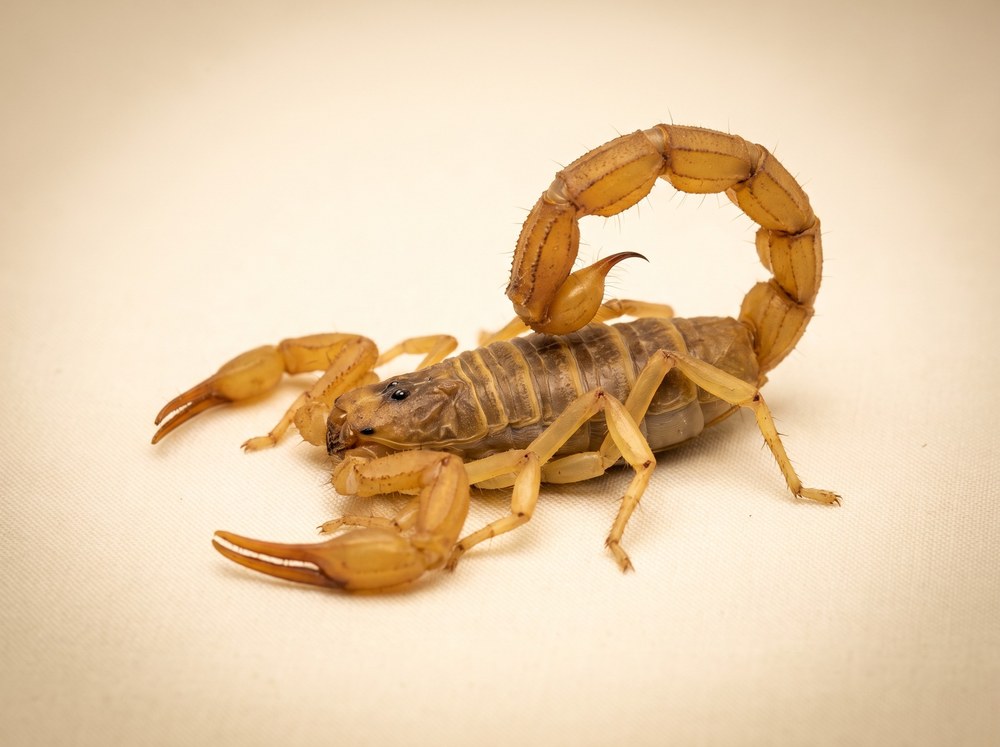
Arizona Bark Scorpion Bite: Symptoms, Danger & Treatment (2026)
Is an Arizona bark scorpion sting deadly? Almost never for a healthy adult — but the pain arrives instantly and can feel disproportionate to the tiny puncture mark left behind. Most people ride it out at home; a smaller group, mostly young children, need urgent care for whole-body neurotoxic symptoms.
What an Arizona bark scorpion sting looks like
There's rarely much to see. Unlike a spider bite, a bark scorpion sting typically leaves little more than a tiny puncture point, maybe a faint red mark, with no bruising, no blister, and no bull's-eye pattern. The mismatch between the minimal visible mark and the intensity of the pain is itself a clue.
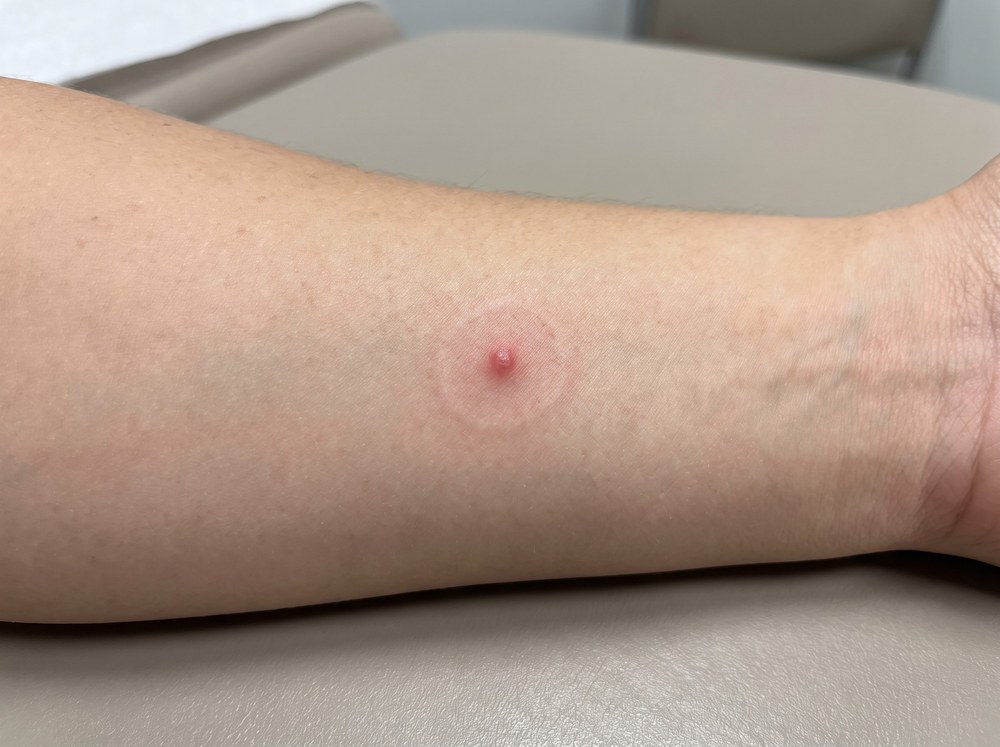
What replaces a visual pattern is a sensory one: an immediate, sharp burning or stinging feeling right at the contact point, often described as far more intense than a bee or wasp sting. Numbness or tingling frequently spreads outward from the site within the first hour, and the skin around it can become hypersensitive — even a light tap can trigger a jolt of sharp pain, a reaction some clinicians and longtime desert residents call the "tap test."
People sometimes assume any painful desert sting must be a spider bite, but true spider bites usually cause more localized swelling and develop over hours, while a bark scorpion sting peaks in intensity almost immediately. Because dozens of scorpion species share the Southwest, correctly identifying which one stung you matters for deciding how urgently to act.
Bite Symptom Checker
Check every symptom you're currently experiencing. Get a plain-English risk read.
Still working out whether what stung you was even a scorpion, an identify bug by picture style check against a wider photo set can help rule out other desert insects before you decide next steps.
Is an Arizona bark scorpion sting dangerous?
For most healthy adults, the answer is: painful, not dangerous. University of Arizona toxicologists note that the vast majority of people stung, regardless of age, recover without needing hospital intervention, and pain plus lingering numbness typically resolves within a few days with basic home care.
The minority-serious-outcome scenario is neurotoxic envenomation — a spectrum that runs from mild tingling up to difficulty breathing, uncontrolled muscle jerking, drooling, and abnormal eye movements. It's genuinely rare for an adult to progress this far, but it happens often enough in children that Arizona's poison centers field tens of thousands of scorpion-sting calls a year and treat several hundred pediatric cases requiring intensive care annually. For a deeper look at how the species is classified and why it's singled out from dozens of related scorpions, the Insectio's illustrated Arizona bark scorpion identification guide is a useful reference.
Children are at higher risk because the same venom dose is proportionally stronger relative to their smaller body mass. Older adults and anyone with significant heart or lung disease are also watched more closely, since the physiological stress of a bad sting can aggravate an existing condition even without full-blown envenomation.
Bottom line: monitor closely for the first six to eight hours. If breathing trouble, drooling, roving eye movements, or spreading full-body muscle jerking show up at any point — in a child or an adult — that's an emergency, not a wait-and-see situation.
Wondering how serious yours actually is?
Run the Symptom CheckerSymptom timeline after a sting
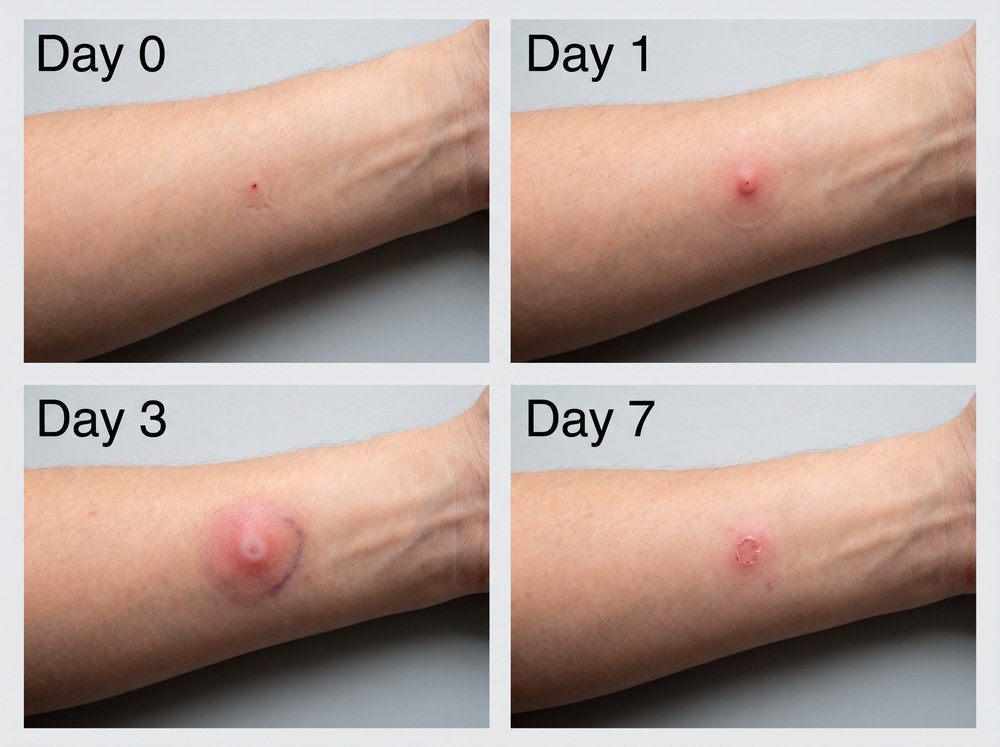
Hours 0–2. Sharp, immediate burning pain at the sting site, often with numbness or tingling beginning to spread. The site becomes hypersensitive to touch.
Hours 2–8. In uncomplicated cases, pain plateaus and slowly starts to ease. In more severe cases — disproportionately in children — this is the window where systemic signs like roving eye movements, slurred speech, or whole-body muscle twitching tend to emerge.
Day 1–2. For the typical case, pain continues to fade and numbness lingers but lessens. Severe cases treated with antivenom in the ER usually see rapid improvement within hours of treatment rather than days.
Day 3–7. Residual tingling or mild numbness at the sting site can persist for several days before resolving completely. If pain, swelling, or numbness is still getting worse rather than better at this point, that's no longer the expected course and warrants medical evaluation.
Which Bug Bit Me?
Not sure it was an Arizona bark scorpion? Answer three questions and we'll narrow the list.
For a side-by-side look at how a bark scorpion compares with its closest lookalikes, this labeled reference is worth a glance before you decide what stung you.
Treatment: what to do right now
Wash and elevate. Clean the sting site with soap and water, then keep the affected hand, arm, or leg elevated to roughly heart level to help ease throbbing and swelling.
Cool, don't heat. A cool compress or ice pack wrapped in a cloth helps dull the burning pain. Heat is not recommended for scorpion stings — it tends to intensify rather than relieve the sensation.
OTC support. Acetaminophen or ibuprofen can take the edge off the pain. Some emergency-medicine guidance specifically advises against taking allergy medication or using an epinephrine auto-injector unless a medical provider has told you to.
Watch, don't wrap. Don't bandage or wrap the site tightly. Instead, track the time of the sting and check in on symptoms every hour or two; escalate immediately if breathing becomes difficult or drooling, slurred speech, or jerking eye movements appear.
Preventing another sting
Bark scorpions climb — they're the only common Southwest scorpion able to scale walls, stucco, and tree bark to get indoors, which is why they turn up in bathrooms, closets, and folded laundry. Shaking out shoes and clothing before wearing them, keeping bed linens off the floor, and moving cribs away from walls all cut down on surprise encounters.
Because they're drawn to moisture, fixing leaky pipes, reducing damp areas, and sealing cracks and gaps in exterior walls removes the conditions they favor most. If you want to confirm a sighting before treating your home, the BugKnow app can identify an Arizona bark scorpion from a quick photo rather than guesswork.
If you've spotted more than one scorpion inside your home, a full pest inspection is warranted — one sighting is rarely isolated in scorpion country.
Not sure whether to head to urgent care?
Use the Decision TreeShould You See a Doctor?
A short decision tree based on CDC and Mayo Clinic guidance.
1 / 3 Is the person having trouble breathing, swallowing, or drooling excessively?
2 / 3 Are the eyes jerking or rolling uncontrollably, or is there slurred speech or whole-body muscle jerking?
3 / 3 Has pain, numbness, or twitching been steadily worsening for several hours, especially in a child, older adult, or someone with a chronic illness?
Take 30 seconds to check your sting now.
Check My SymptomsFrequently asked questions
Can an Arizona bark scorpion sting kill you?
Deaths from Arizona bark scorpion stings are rare, especially with prompt medical evaluation and antivenom access. University of Arizona toxicologists note that more than 95% of people who are stung, regardless of age, recover without serious complications. The real risk is concentrated in young children, who can develop severe neurotoxic reactions requiring hospital-based treatment.
How long until I know if a scorpion sting is serious?
Severe reactions usually announce themselves within the first two to eight hours through symptoms like roving eye movements, slurred speech, drooling, or difficulty breathing. If none of those appear within that window and pain is slowly easing, the sting is very likely following the typical mild-to-moderate course. Watch closely during the first day regardless.
How do I tell an Arizona bark scorpion from a striped bark scorpion?
Arizona bark scorpions are pale, translucent tan with slender pincers and no bold markings, and they are the only common desert scorpion able to climb walls and ceilings. Striped bark scorpions are a brighter orange-yellow with two distinct dark stripes down the back, a thicker tail, and heavier pincers, and their venom is considerably less potent.
What does a bark scorpion sting feel like?
The sting causes an immediate, sharp burning or stinging sensation at the exact site of contact, often described as far more intense than the tiny puncture mark would suggest. Numbness, tingling, or heightened sensitivity to touch commonly follows and can radiate outward from the sting over the following hours.
Do I need antivenom for a scorpion sting?
Most adults do not need antivenom and recover with home care, cool compresses, and over-the-counter pain relief. Antivenom becomes a consideration when a person, especially a child, develops systemic neurotoxic signs such as uncontrolled muscle jerking, difficulty breathing, or abnormal eye movements. That decision is made by emergency medical staff, not at home.
Why are children more at risk from scorpion stings?
Children have smaller body mass relative to the amount of venom injected, so the same sting delivers a proportionally stronger neurotoxic dose. Public health data from Arizona shows children make up the group most likely to need intensive hospital-level treatment after a bark scorpion sting, which is why pediatric stings are treated with extra urgency.
What attracts bark scorpions into homes, and how can I keep them out?
Bark scorpions are drawn indoors while seeking moisture, shade, and prey, which is why they turn up in bathrooms, laundry rooms, and damp corners. According to University of Arizona entomology research, sealing cracks and gaps and reducing dampness around a home's foundation meaningfully cuts down on indoor encounters. Shoes, linens, and folded towels should be checked before use.
Is the "tap test" a reliable way to confirm a scorpion sting?
Lightly tapping the suspected sting site and getting a sharp jolt of pain is a widely reported hallmark of bark scorpion envenomation, since the venom causes hypersensitivity at the site. It is a useful clue but not formal diagnosis. If you didn't see the scorpion, describing this reaction to a medical provider or poison control still helps narrow down the cause.
Can a scorpion sting cause long-term nerve damage?
For the large majority of people, lingering numbness or tingling at the sting site fades within days and resolves completely without lasting nerve damage. Severe pediatric cases treated promptly with antivenom also tend to recover fully. Long-term complications are considered rare when the sting is monitored and escalated to care if symptoms worsen.
Curious how your sting stacks up against typical cases?
Get a Risk Read